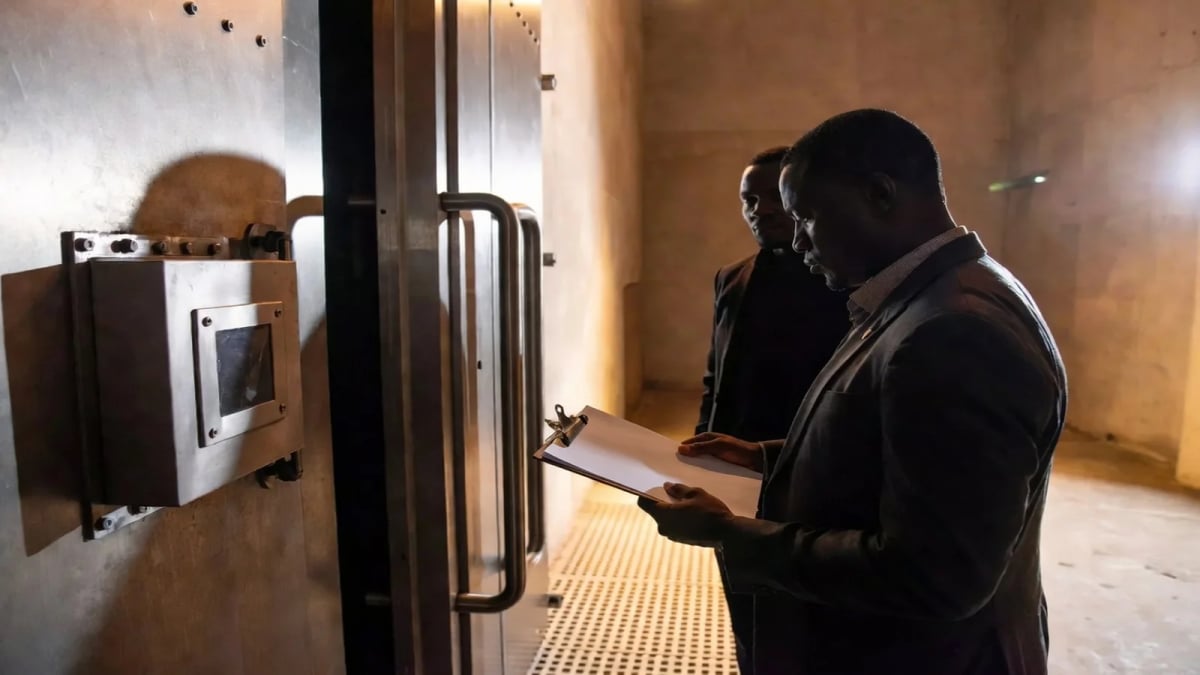
Secure vaulting programme for an institutional investor
An institutional investor required secure custody and documented chain-of-custody for a precious-metals holding. The Project Office established a vaulting and audit protocol with verified access records and periodic reporting.
Project Profile
Sector: Institutional investment — precious-metals physical asset management Scope: End-to-end vaulting programme covering sourcing, assay verification, chain-of-custody documentation, and structured physical custody of refined gold holdings Geography: Accra, Ghana Timeline: Ongoing managed programme with formal quarterly review cycles
An institutional investor operating within Ghana’s regulated financial sector required a structured, documented programme for physical gold custody — one that met the rigour their board, auditors, and counterparties demanded. The engagement called for far more than storage. It required a defensible chain-of-custody framework, independent assay verification at every material intake stage, and a reporting architecture their compliance function could act on with confidence.
The Programme Challenge
Physical precious-metals custody at institutional scale introduces a category of risk that financial assets held electronically do not. Every gram held must be traceable: origin-documented, assay-confirmed, and recorded within a chain-of-custody log that can withstand audit scrutiny from both domestic regulators and international counterparties.
This client’s position was further complicated by the sourcing environment. Gold acquired through Ghana’s formal and artisanal channels varies in purity, provenance documentation, and responsible-sourcing status. An institutional investor cannot accept undifferentiated metal — the reputational, regulatory, and counterparty-risk implications are material. Their existing processes lacked the systematic intake controls and documentation discipline the programme demanded.
Approach
Ghana Metals structured the engagement across three interdependent service layers.
Sourcing and intake discipline: All metal entering the programme passed through a documented intake protocol — provenance assessment, responsible-sourcing compliance review, and chain-of-custody registration prior to any assay proceeding. No metal advanced to the next stage without a completed intake record.
Independent assay verification: Each consignment underwent assay verification against declared purity, with results recorded, referenced against intake documentation, and reported to the client’s compliance team. Discrepancies triggered a formal hold and review process — no exceptions.
Chain-of-custody reporting: A structured reporting cycle was established aligned to the client’s quarterly audit calendar. Each cycle produced a consolidated chain-of-custody record covering all holdings: intake dates, assay results, custody status, and responsible-sourcing compliance notes. The format was designed to be presented directly to auditors and board risk committees without intermediary interpretation.
Outcome
The programme delivered a physical gold custody framework that satisfied the client’s internal compliance requirements and stood up to independent audit review. The board risk committee received its first consolidated custody report within the agreed timeline — a document that traced every holding from sourced origin through assay verification to current custody status.
The client’s counterparty relationships benefited directly: documented chain-of-custody and assay records provided the evidence base institutional counterparties require before transacting on physical metal. Responsible-sourcing compliance documentation reduced the due-diligence burden on both sides of subsequent transactions.
What This Project Demonstrates
Institutional investors entering or expanding physical gold holdings in Ghana require something most sourcing engagements do not provide: a compliance-grade custody programme, not simply a supply arrangement. The documentation discipline, assay integrity, and chain-of-custody rigour that boards and auditors demand must be built into the programme architecture from the outset — not retrofitted.
Ghana Metals operates at this level by design. The sourcing discipline precious metals demand is not an aspiration; it is the documented, auditable process that every programme we manage is held to.