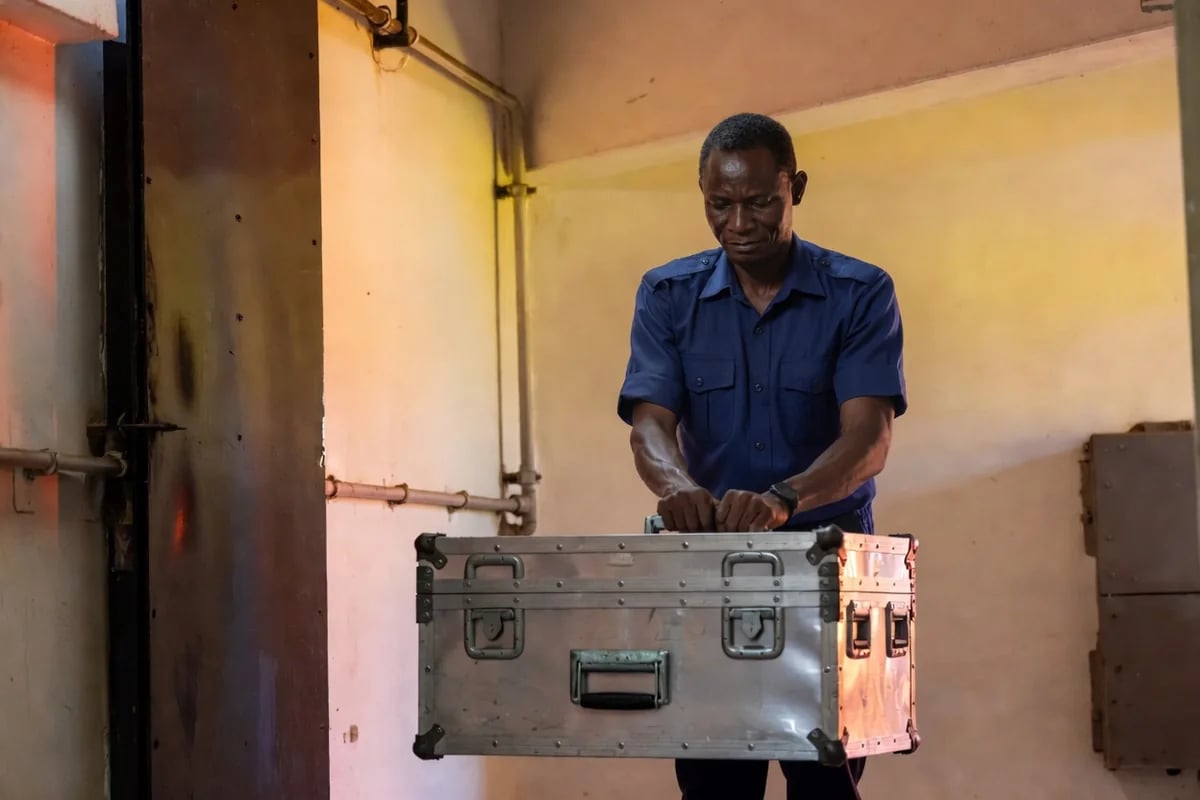
How Gold Is Vaulted and Moved Under Documented Custody in Ghana
Precious metals in transit or in custody need more than a strongroom — they need an unbroken, documented chain-of-custody that satisfies refineries, banks, and regulators at every handover. Ghana Metals coordinates secure vaulting, weighing reconciliation, and logistics as a compliance-integrated service, within Ghana’s GoldBod-regulated framework (Ghana Gold Board Act, 2025 — Act 1140), since 1976. Institutional clients only: +233 27 000 0844.
Why Vaulting and Custody Operations Specify Ghana Metals
Precious metals in transit or held in custody require more than physical security — they require a documented chain-of-custody discipline that satisfies the exacting standards of refineries, institutional investors, and regulated financial entities. Ghana Metals approaches vaulting, storage, and logistics coordination not as a warehousing function, but as a compliance-integrated service in which every handover, every weighing reconciliation, and every movement record forms part of a defensible audit trail.
For operations across Ghana and Togo, where regulatory oversight of precious-metals custody is rigorous and counterparty trust is foundational, the integrity of the storage and logistics framework directly affects transaction viability. Clients who commission Ghana Metals for custody services receive a process architecture designed to withstand regulatory scrutiny, institutional due diligence, and the documentation demands of downstream refinery or bank counterparties.
Specification Requirements Unique to Vaulting and Custody
Precious-metals custody within Ghana and Togo operates under multi-layered regulatory oversight — spanning minerals commission frameworks, central bank foreign-exchange reporting obligations, and export documentation requirements. Custody operations that fail to maintain continuous, unbroken documentation from point of receipt to point of release introduce chain-of-custody gaps that can suspend transactions, trigger regulatory inquiry, or void export licences.
Beyond regulatory compliance, institutional counterparties — particularly refineries and banks acting as offtakers — impose their own custody verification requirements. Assay documentation must align with weighing records held in the custody facility. Handover protocols must be witnessed, timestamped, and cross-referenced against purchase documentation. Ghana Metals structures its vaulting and logistics coordination service to meet these layered requirements from the outset, so that custody records are not reconstructed after the fact but built concurrently with the physical movement of metal.
Recommended Services for Vaulting and Custody Operations
- Secure Custody and Weighing Reconciliation — documented receipt, vault storage, and periodic reconciliation of holdings against purchase and assay records
- Chain-of-Custody Documentation — end-to-end handover protocols covering every physical transfer, with timestamped records suitable for regulatory and institutional review
- Logistics Coordination — facilitation of secure in-country transport across Ghana and Togo, coordinated with licensed carriers and aligned to export or delivery timelines
- Assay Integration — custody records cross-referenced with assay certification to ensure metal specifications at point of release match those at point of receipt
- Pre-Export Documentation Support — preparation and verification of custody-linked documentation required for export licence processing and refinery acceptance
Notable Project Types
Ghana Metals has coordinated custody and logistics frameworks for consolidation operations where aggregated artisanal and small-scale mining output requires secure holding prior to assay and export. These engagements demand continuous documentation across multiple receipt events, with each parcel tracked individually until final consolidation and handover to the export chain.
Institutional custody mandates have also included holdings managed on behalf of investment entities requiring periodic reporting on metal weight, condition, and compliance status — with documentation structured to satisfy both local regulatory bodies and the due-diligence requirements of international counterparty institutions. In each case, the scope extends beyond physical security to encompass the documentation discipline that gives custody value its institutional credibility.
Compliance and Standards
- Alignment with Ghana Minerals Commission custody and export regulatory frameworks
- Togo cross-border movement documentation protocols maintained at every transfer point
- Central bank reporting obligations addressed within custody and logistics record structures
- Chain-of-custody records formatted to meet responsible-sourcing compliance requirements of institutional offtakers
- Handover documentation structured to satisfy refinery due-diligence and acceptance criteria
- Periodic reconciliation procedures conducted against both assay certification and purchase documentation to maintain unbroken audit trails
Our Services for Security & Logistics Operations
- Secure Vaulting & Logistics — sealed custody, weighing reconciliation, and tracked movement
- Gold Assay & Fineness Verification — custody records cross-referenced with a transparent assay certificate
- Responsible Gold Sourcing — OECD-aligned due diligence at origin
- Gold Export Compliance — documentation within the GoldBod regime
- How to Verify a Legitimate Gold Supplier — the anti-scam checklist
Legitimacy & Compliance
- We work within Ghana’s GoldBod-regulated framework — the Ghana Gold Board Act, 2025 (Act 1140), under which the Ghana Gold Board (GoldBod) is the national assayer and the sole legal buyer, assayer and exporter of artisanal and small-scale (ASM) gold. We operate within that regime and coordinate the official assay/export where they apply; we do not claim to be GoldBod, to mine, or to be a refinery
- Where gold under custody is valued, it is valued against the international spot price (LBMA / COMEX) for its assayed fineness and weight — there is no separate “Ghana gold price”, and we never value or offer gold below spot. An offer “below spot”, an advance fee, or a “guaranteed” parcel is the signature of a scam, not a deal
- Institutional clients only — refineries, banks, investors, vault operators, secure-logistics providers; we do not sell gold to the public. Responsible-sourcing due diligence aligned to the OECD framework, with documented chain-of-custody throughout. Established 1976
Arrange secure custody: +233 27 000 0844. Institutional clients only.