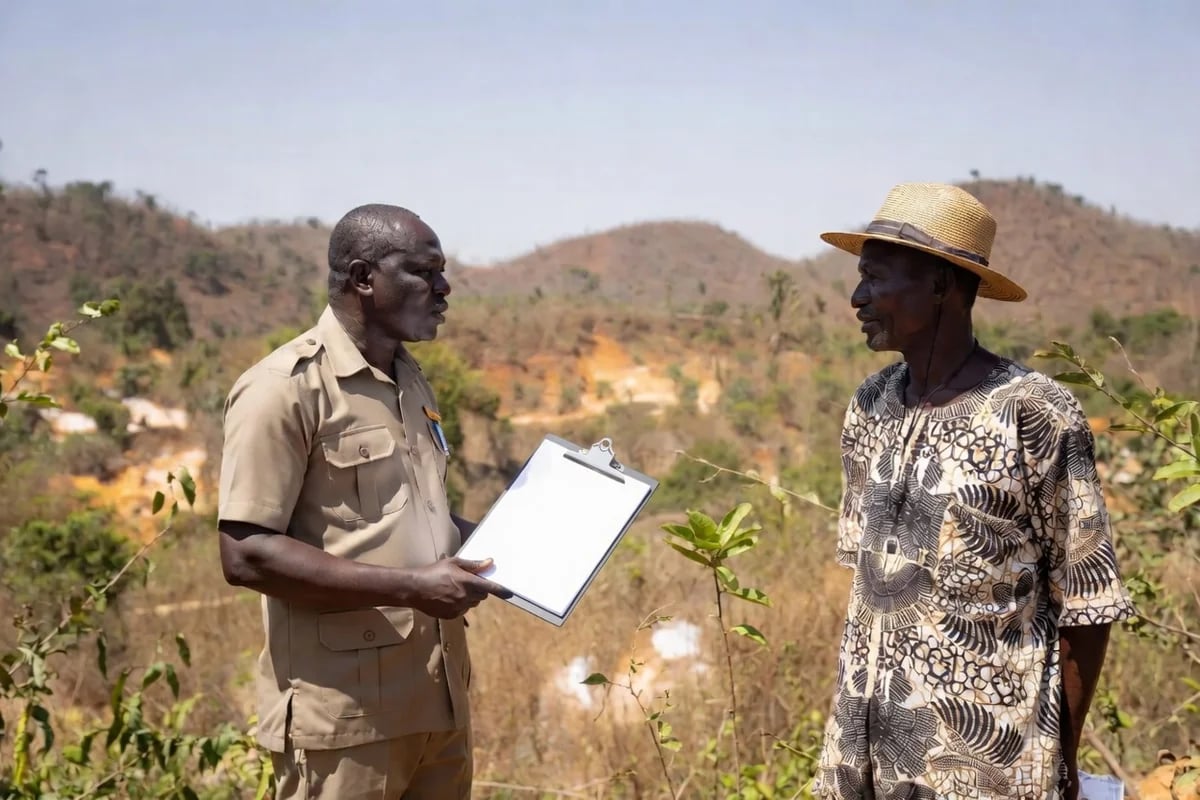
The problem
Institutional buyers need a documented, HSE-disciplined source for responsible-sourcing due diligence.
Our approach
Responsible-Sourcing Due Diligence
Responsible-Sourcing Due Diligence delivered to institutional standard — structured procurement, chain-of-custody discipline, documented handover.
The Challenge
Precious metals move through complex, multi-party supply chains before they reach a refinery, an institutional vault, or a manufacturing process. At each transition point — from artisanal and small-scale mining communities through aggregation, transport, and export — the integrity of that material can be compromised, misrepresented, or left undocumented. For institutional buyers, banks, and refineries operating under international compliance frameworks, undocumented provenance is not merely an inconvenience: it is a structural risk that can halt transactions, trigger regulatory scrutiny, and damage institutional reputation.
In Ghana and Togo, the responsible-sourcing landscape carries specific operational complexity. Regulatory requirements, community dynamics, and multi-agency licensing obligations intersect in ways that demand both technical knowledge and on-ground process discipline. Buyers who rely on informal assurances rather than documented chain-of-custody expose themselves to provenance disputes, contested assay results, and trade facilitation delays that erode the commercial case entirely.
The sector has historically tolerated opacity where it should have demanded documentation. Institutional clients — refineries, sovereign-wealth intermediaries, export operations — increasingly cannot afford that tolerance. The standard has shifted, and the due-diligence infrastructure must shift with it.
The Ghana Metals Solution
Ghana Metals approaches responsible-sourcing due diligence as a structured, process-governed engagement rather than a compliance checkbox. The work begins at point of origin: systematic supplier assessment, documentation of mining rights and licensing status, and evaluation of community and environmental practice against the responsible-sourcing criteria that institutional end-buyers apply. Nothing advances through the chain without documented verification at each stage.
Chain-of-custody discipline is maintained from initial procurement through to handover documentation. Every material movement is recorded, every assay result is formally referenced, and every counterparty in the supply sequence is assessed against the due-diligence framework appropriate to the transaction type. For clients whose institutional mandates require external-facing compliance reporting, Ghana Metals structures the documentation to meet that reporting standard — so that the end-buyer receives not just metal, but the documented provenance case that supports it.
The methodology is calibrated to the specific corridor — Ghana or Togo — reflecting the regulatory environment, licensing regime, and operational context of each. This geographic specificity is not administrative detail; it is the foundation on which a defensible compliance position is built.
Process and Documentation Framework
- Supplier assessment and licensing verification — structured review of mining-right status, export licensing, and regulatory standing before any procurement engagement proceeds
- Chain-of-custody documentation — sequential handover records maintained at each transition point, from origin through aggregation to final delivery
- Assay referencing and material characterisation — independent assay results formally integrated into the provenance file, ensuring the documented material matches the transacted material
- Responsible-sourcing criterion mapping — alignment of supplier and process data to the due-diligence criteria applied by institutional refineries and end-buyers
- Compliance report structuring — documentation packaged to the reporting format required by the client’s institutional mandate, ready for submission to counterparty or regulatory review
- Escalation and remediation protocol — defined process for addressing gaps, disputes, or documentation deficiencies identified during the due-diligence cycle
Typical Engagement Profile
A responsible-sourcing due-diligence engagement typically serves a refinery preparing to onboard a new supply corridor in Ghana or Togo, an institutional investor conducting pre-acquisition provenance review, or an export operation requiring documented compliance ahead of a regulated cross-border transaction. Engagements are scoped to the complexity of the supply chain under review and the reporting requirements of the end-buyer. Timelines reflect the depth of supplier assessment required and the number of transition points that must be documented — with the discipline of the process, not calendar speed, governing the outcome.
Outcomes for Institutional Clients
- A complete, documented chain-of-custody file that supports regulatory review and institutional compliance reporting
- Reduced counterparty risk through verified supplier assessment and licensing confirmation at point of origin
- Assay-referenced provenance records that align the physical material with its documented history
- A compliance-ready report structure formatted to the standards institutional end-buyers and refineries require
- Confidence that the sourcing process, from origin to handover, has been conducted under documented, auditable discipline